
The Anespa Shower Filter

Dive Into The Facts Of What This Anespa Is, How It Works & Why This Filter Can Elevate Your Skin Health
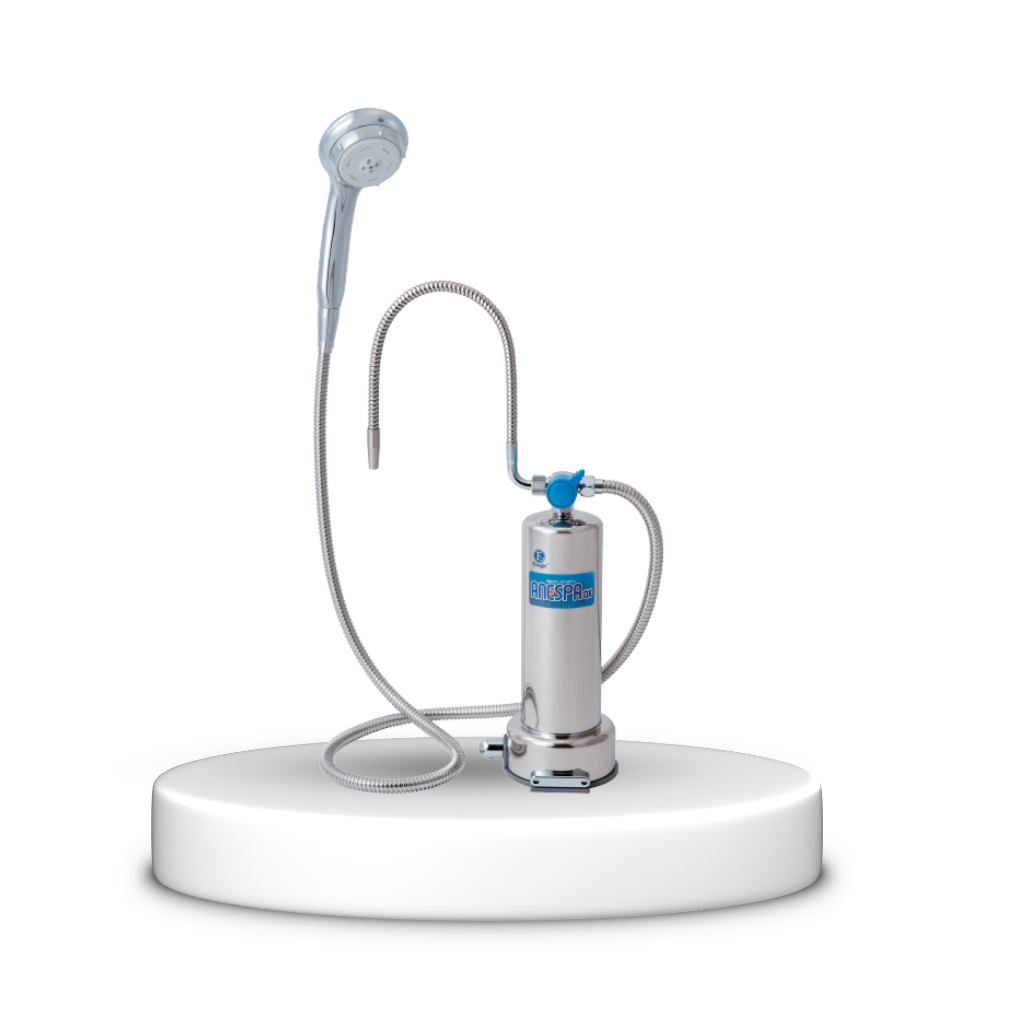
The Anespa Shower Filter
Dive Into The Facts Of What This Anespa Is, How It Works & Why This Filter Can Elevate Your Skin Health
What Is The Anespa DX?
What Is The Anespa DX?
The Anespa DX is a mineral ion shower system designed to improve tap water quality through a two-stage filtration and conditioning process. In the first stage, water passes through an activated carbon filter, which reduces free chlorine and certain common water impurities. Chlorine reduction is a well-established function of activated carbon filtration, and minimizing chlorine exposure during showering may help support the skin’s natural moisture barrier, as chlorine can contribute to dryness and irritation by disrupting surface lipids.
After filtration, the water flows through a secondary mineral cartridge containing natural materials such as Tufa Stone, MIC (Mineral Ion Ceramic) media, and Power Stone. Tufa Stone is a porous, calcium-rich mineral (largely composed of calcium carbonate) that contributes trace mineral content and helps condition the water. MIC ceramic media are specially processed mineral ceramics designed to interact with water through surface contact, supporting mineral ion exchange and conditioning. Power Stone, another mineral-based ceramic component, is formulated to further influence the water’s mineral profile and create a mildly alkaline, mineral-enriched shower water similar in composition to certain Japanese hot spring (onsen) waters. While the Anespa is not classified as a medical device and does not claim to treat disease, its design is built around two recognized principles — reducing potential skin irritants and conditioning water with natural minerals — to provide a gentler, spa-like shower experience that many users report feels softer and more comfortable on skin and hair.
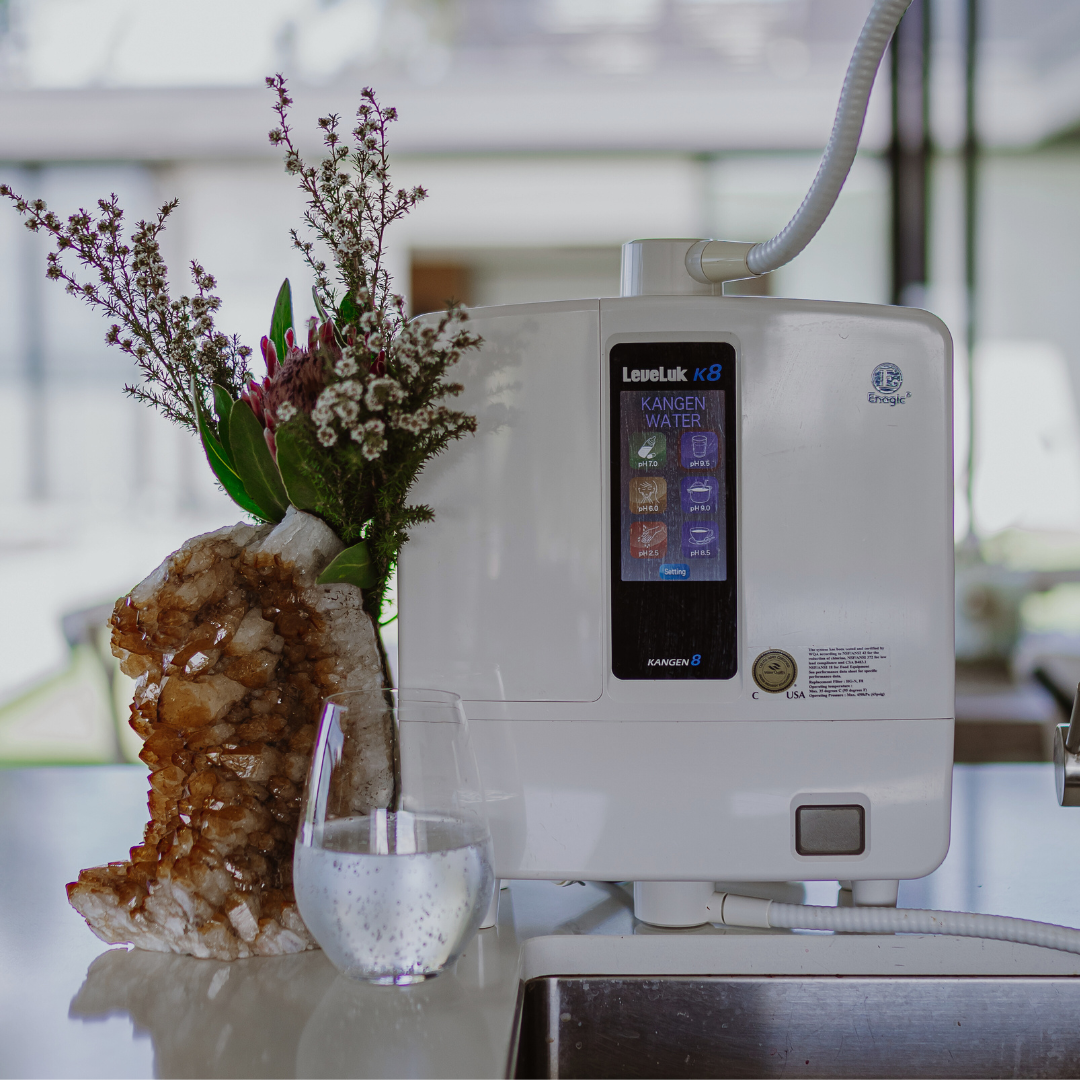
Kangen Water is produced through a process called electrolysis using a device manufactured by Enagic. First, tap water passes through a high-grade carbon filter, which helps reduce common impurities such as chlorine, sediment, and some volatile organic compounds, while retaining naturally occurring minerals like calcium and magnesium. This is important because the next stage, electrolysis, relies on those minerals to function properly. Inside the electrolysis chamber—equipped with platinum-coated titanium plates—an electrical current is applied to the water. This process separates the water into two streams: alkaline water, which has a higher pH and a negative oxidation-reduction potential (ORP), and acidic water, which is often used for cleaning or topical purposes.
What sets Kangen Water apart from standard tap, bottled, or reverse osmosis water is its adjustable pH range and altered electrical charge (ORP). While most bottled waters are neutral or slightly acidic and lack active mineral content, Kangen Water is mineral-rich, electrically modified, and customizable based on intended use—ranging from strong acidic to strong alkaline levels. The properties of the water, such as pH and ORP, depend on the local water source and machine settings. While filtration and electrolysis are well-established processes, it's important to view Kangen Water through the lens of chemistry and avoid overstated health claims unless supported by clinical evidence.
Kangen Water is produced through a process called electrolysis using a device manufactured by Enagic. First, tap water passes through a high-grade carbon filter, which helps reduce common impurities such as chlorine, sediment, and some volatile organic compounds, while retaining naturally occurring minerals like calcium and magnesium. This is important because the next stage, electrolysis, relies on those minerals to function properly. Inside the electrolysis chamber Electrolysis simply means using electricity to cause a chemical reaction in water. Inside the machine, the water flows over electrically charged plates. When the electrical current passes through, it separates the water into two streams. On the negative side, water molecules gain electrons (a process called reduction), which produces dissolved molecular hydrogen gas (H₂) and increases hydroxide ions (OH⁻), making the water more alkaline. On the positive side, an acidic stream is produced. The drinking water comes from the negative side, which is why it contains dissolved hydrogen gas and has a higher pH than the original tap water.
What makes this water unique is the presence of dissolved molecular hydrogen. Hydrogen gas is the smallest molecule in existence, allowing it to diffuse easily throughout the body after consumption. Research suggests that molecular hydrogen may help reduce oxidative stress by selectively neutralizing highly reactive free radicals and supporting healthy cellular signaling. Because the electrolysis process happens instantly as the water flows through the machine, hydrogen-rich water is produced fresh from the tap.
What sets Kangen Water apart from standard tap, bottled, or reverse osmosis water is its adjustable pH range and altered electrical charge (ORP). While most bottled waters are neutral or slightly acidic and lack active mineral content, Kangen Water is mineral-rich, electrically modified, and customizable based on intended use—ranging from strong acidic to strong alkaline levels. The properties of the water, such as pH and ORP, depend on the local water source and machine settings. While filtration and electrolysis are well-established processes, it's important to view Kangen Water through the lens of chemistry and avoid overstated health claims unless supported by clinical evidence.
Kangen Water is produced through a process called electrolysis using a device manufactured by Enagic. First, tap water passes through a high-grade carbon filter, which helps reduce common impurities such as chlorine, sediment, and some volatile organic compounds, while retaining naturally occurring minerals like calcium and magnesium. This is important because the next stage, electrolysis, relies on those minerals to function properly. Inside the electrolysis chamber—equipped with platinum-coated titanium plates—an electrical current is applied to the water. This process separates the water into two streams: alkaline water, which has a higher pH and a negative oxidation-reduction potential (ORP), and acidic water, which is often used for cleaning or topical purposes.
What sets Kangen Water apart from standard tap, bottled, or reverse osmosis water is its adjustable pH range and altered electrical charge (ORP). While most bottled waters are neutral or slightly acidic and lack active mineral content, Kangen Water is mineral-rich, electrically modified, and customizable based on intended use—ranging from strong acidic to strong alkaline levels. The properties of the water, such as pH and ORP, depend on the local water source and machine settings. While filtration and electrolysis are well-established processes, it's important to view Kangen Water through the lens of chemistry and avoid overstated health claims unless supported by clinical evidence.
The Anespa DX is a mineral ion shower system designed to improve tap water quality through a two-stage filtration and conditioning process. In the first stage, water passes through an activated carbon filter, which reduces free chlorine and certain common water impurities. Chlorine reduction is a well-established function of activated carbon filtration, and minimizing chlorine exposure during showering may help support the skin’s natural moisture barrier, as chlorine can contribute to dryness and irritation by disrupting surface lipids.
After filtration, the water flows through a secondary mineral cartridge containing natural materials such as Tufa Stone, MIC (Mineral Ion Ceramic) media, and Power Stone. Tufa Stone is a porous, calcium-rich mineral (largely composed of calcium carbonate) that contributes trace mineral content and helps condition the water. MIC ceramic media are specially processed mineral ceramics designed to interact with water through surface contact, supporting mineral ion exchange and conditioning. Power Stone, another mineral-based ceramic component, is formulated to further influence the water’s mineral profile and create a mildly alkaline, mineral-enriched shower water similar in composition to certain Japanese hot spring (onsen) waters. While the Anespa is not classified as a medical device and does not claim to treat disease, its design is built around two recognized principles — reducing potential skin irritants and conditioning water with natural minerals — to provide a gentler, spa-like shower experience that many users report feels softer and more comfortable on skin and hair.
More About The Shower System...
The Anespa DX is designed to integrate directly into your existing shower setup without plumbing modifications, making it a practical water-quality upgrade rather than a renovation project. It connects through standard shower fittings and functions passively — meaning once installed, it continuously filters and conditions water every time the shower runs, with no electricity or complicated settings required.
During a typical 10-minute shower, the body can be exposed to 15–25 gallons of water, and while the skin is a protective barrier rather than a sponge, warm water and steam increase surface contact and inhalation of chlorine vapors. If water is not filtered at the source, your skin and lungs become the point of contact for those compounds. By reducing chlorine and conditioning the water before it reaches you, the system helps shift the filtration process to the device rather than your body — supporting the skin barrier and creating a gentler daily exposure experience. The ease of installation, simple cartridge replacement, and compatibility with standard plumbing make it accessible for renters and homeowners alike who want a consistent water-quality upgrade without complexity. hydrogen (H₂) is a colorless, odorless gas made of two hydrogen atoms bonded together and is the smallest and lightest molecule in existence. Unlike hydrogen ions (H⁺), which determine acidity and pH, molecular hydrogen is a neutral dissolved gas that can be infused into water and consumed. Because of its extremely small size and nonpolar nature, H₂ can rapidly diffuse across cell membranes and even cross the blood–brain barrier, allowing it to distribute throughout the body after ingestion or inhalation.
Molecular hydrogen (H₂) is a colorless, odorless gas made of two hydrogen atoms bonded together and is the smallest and lightest molecule in existence. Unlike hydrogen ions (H⁺), which determine acidity and pH, molecular hydrogen is a neutral dissolved gas that can be infused into water and consumed. Because of its extremely small size and nonpolar nature, H₂ can rapidly diffuse across cell membranes and even cross the blood–brain barrier, allowing it to distribute throughout the body after ingestion or inhalation.
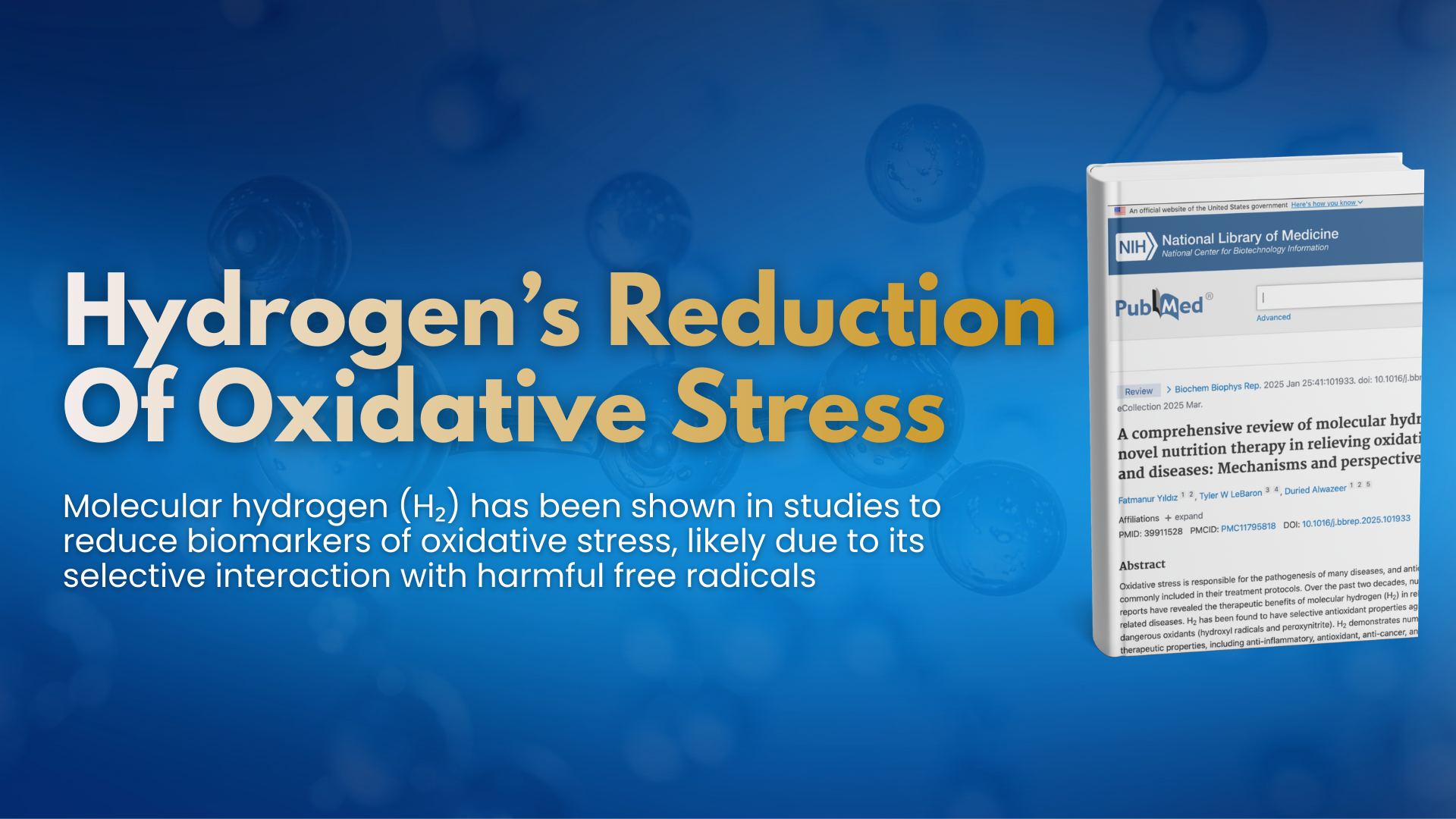
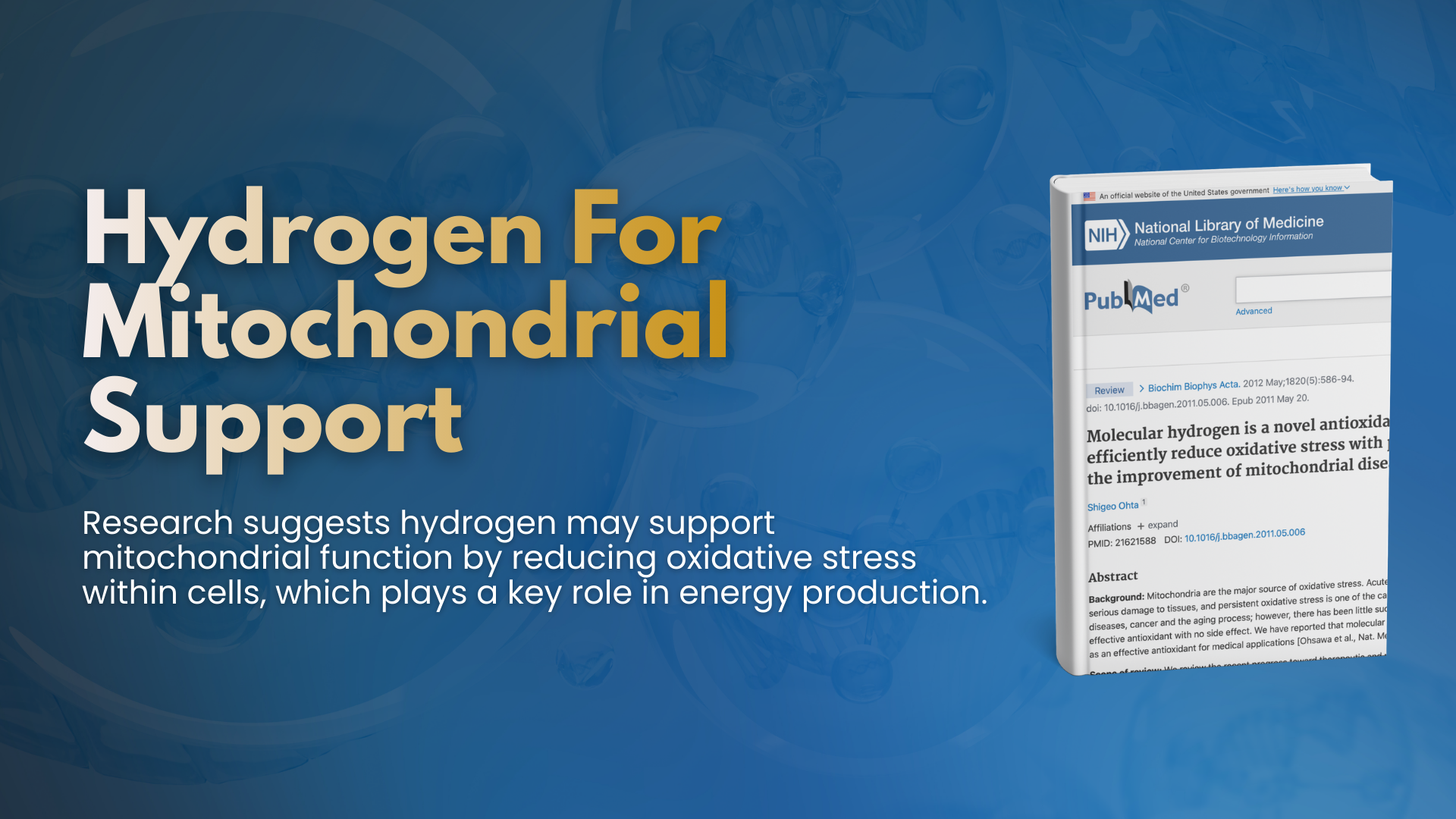
Research over the past decade and a half suggests that molecular hydrogen may act as a selective antioxidant, meaning it preferentially reacts with highly reactive and damaging oxidants such as hydroxyl radicals while not interfering with beneficial reactive oxygen species involved in normal cellular signaling. Beyond direct radical scavenging, studies indicate hydrogen may influence redox-sensitive signaling pathways, gene expression, and mitochondrial function, contributing to reduced oxidative stress and modulation of inflammatory responses. Importantly, hydrogen is not a mineral, vitamin, or alkaline substance; its proposed biological effects are linked specifically to dissolved H₂ gas concentration, often measured in parts per million (ppm), and excess hydrogen is simply exhaled, contributing to its strong safety profile in human research to date.
More About The Shower System...
The Anespa DX is designed to integrate directly into your existing shower setup without plumbing modifications, making it a practical water-quality upgrade rather than a renovation project. It connects through standard shower fittings and functions passively — meaning once installed, it continuously filters and conditions water every time the shower runs, with no electricity or complicated settings required.
During a typical 10-minute shower, the body can be exposed to 15–25 gallons of water, and while the skin is a protective barrier rather than a sponge, warm water and steam increase surface contact and inhalation of chlorine vapors. If water is not filtered at the source, your skin and lungs become the point of contact for those compounds. By reducing chlorine and conditioning the water before it reaches you, the system helps shift the filtration process to the device rather than your body — supporting the skin barrier and creating a gentler daily exposure experience. The ease of installation, simple cartridge replacement, and compatibility with standard plumbing make it accessible for renters and homeowners alike who want a consistent water-quality upgrade without complexity.
Deeper Dive Into The Anespa
A Deeper Dive Into The Anespa
Learn How The Outputs Of This System Can Create Massive Benefits In Your Skin Health

Why Kangen Water Works...
Why Kangen Water Works
Kangen Water “works,” from a scientific standpoint, because it contains dissolved molecular hydrogen gas (H₂). Inside the water that's created from the K8 machine, filtered tap water flows over electrically charged titanium plates, and electrolysis occurs—meaning an electrical current separates some of the water molecules (H₂O), allowing hydrogen gas to form and dissolve directly into the water. It’s this dissolved H₂—not the alkalinity alone—that has been studied for therapeutic potential. Molecular hydrogen is uniquely small and neutral, allowing it to diffuse into cells and tissues where it can selectively neutralize harmful reactive oxygen species and influence cell signaling pathways related to inflammation and oxidative stress.
When hydrogen gas is no longer present (because it dissipates over time), those biological effects are no longer observed in studies, which tells us the benefit is tied specifically to the dissolved hydrogen concentration. A machine that produces hydrogen-rich water on demand allows you to generate and consume it immediately—when hydrogen levels are at their highest—rather than relying on products where hydrogen may degrade before consumption.
Why Kangen Water Works...
How The Anespa Works
Step 1: Tap Water Enters the System
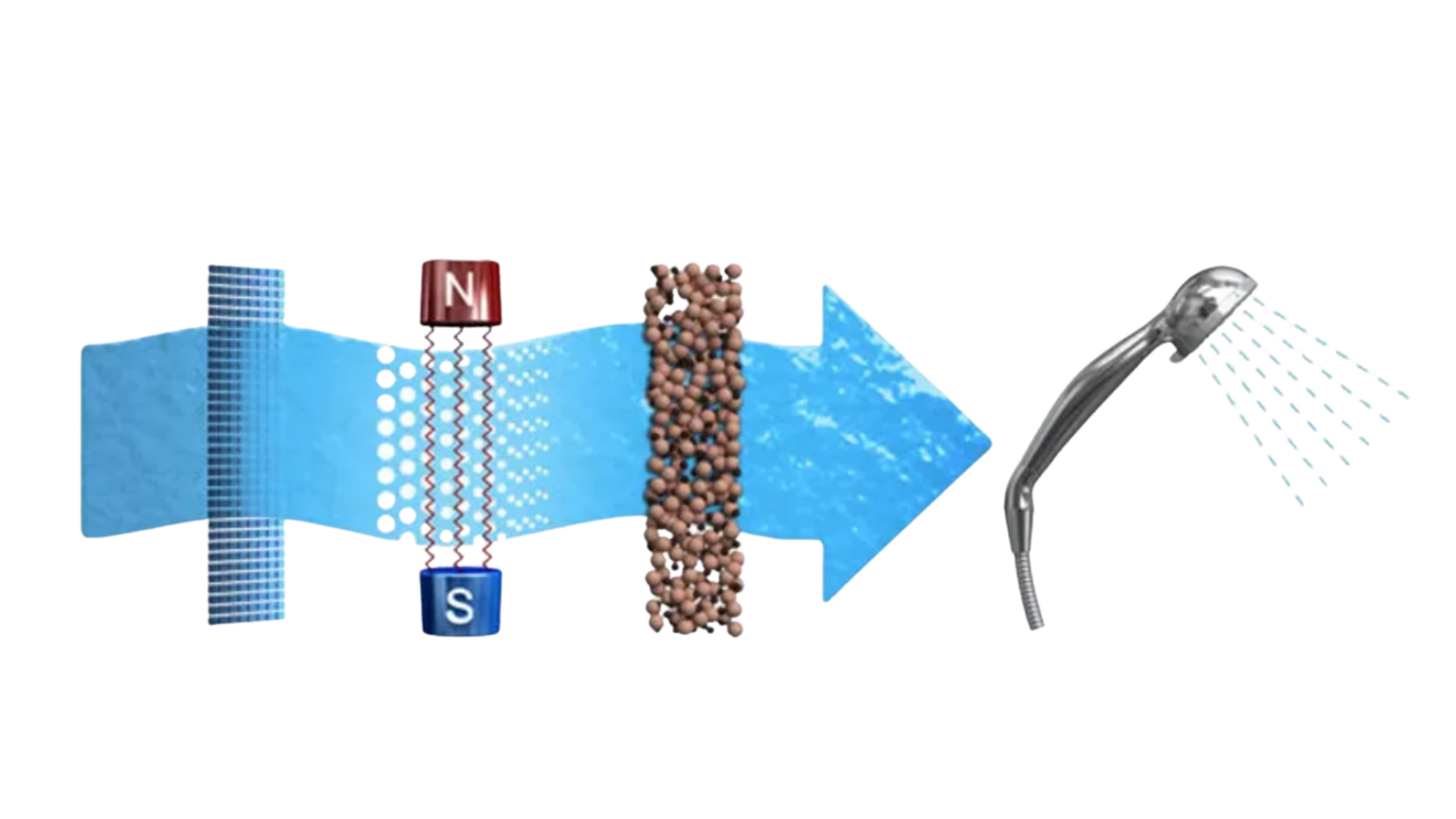
Regular municipal tap water flows into the Anespa unit through the inlet hose.
Step 2: Activated Carbon Filtration (Primary Filter Stage) Water first passes through an activated carbon filter. Activated carbon is highly porous and works through adsorption (binding contaminants to its surface). In this stage, free chlorine and certain impurities commonly found in tap water are reduced. Chlorine reduction is well established in water treatment science, and lowering chlorine exposure during showering may help support the skin’s natural moisture barrier.
Step 3: Pre-Filtration of Particulates
The filter also helps reduce sediment, rust particles, and other physical debris that may be present in plumbing systems, contributing to cleaner water flow.
Step 4: Mineral Conditioning Chamber (Secondary Cartridge)
After filtration, the water enters the mineral chamber containing natural materials!
Step 5: Mineral Ion Water Delivered to the Showerhead
How The Anespa Works...
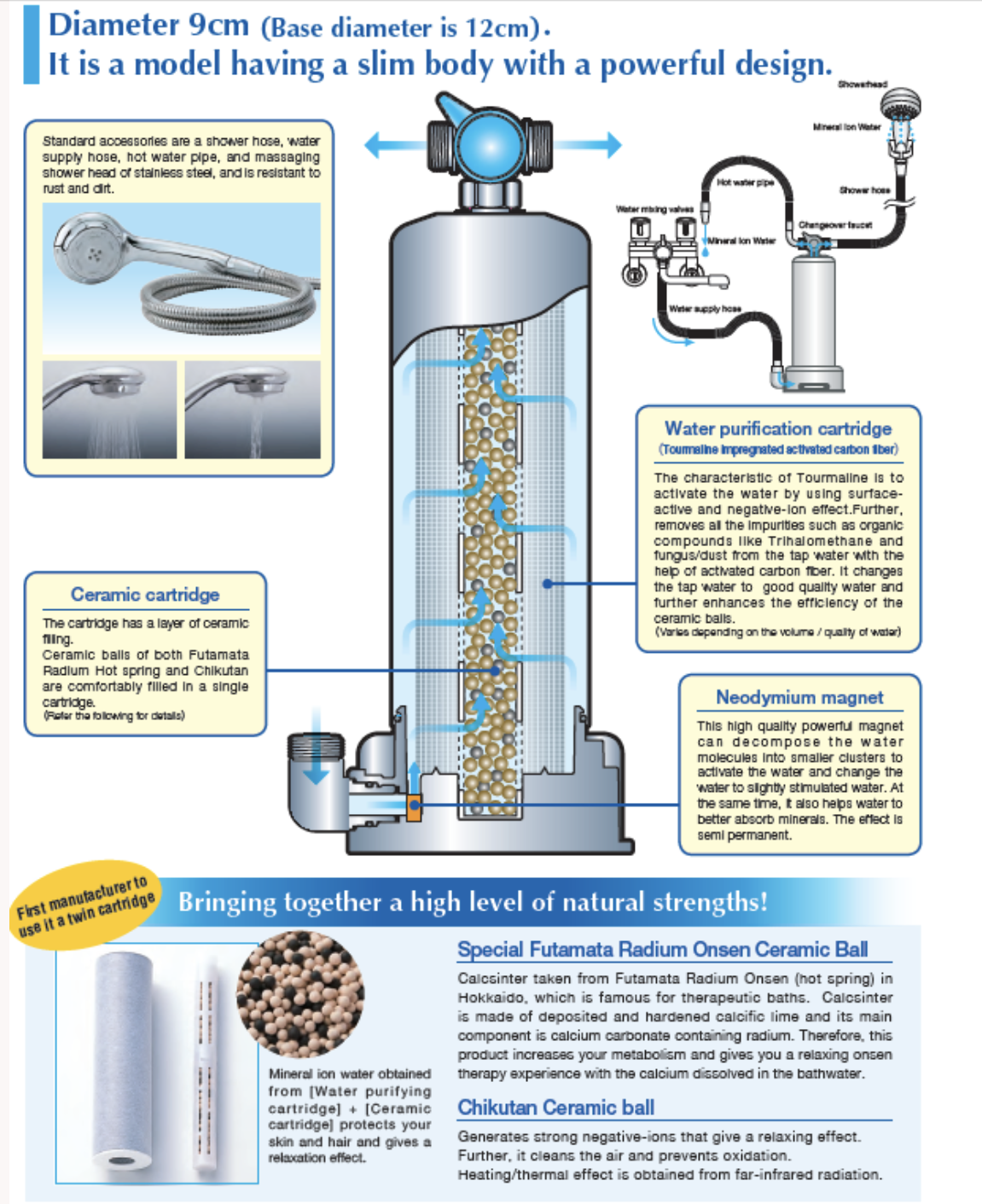
Step 1: Tap Water Enters the System
Regular municipal tap water flows into the Anespa unit through the inlet hose.
Step 2: Activated Carbon Filtration (Primary Filter Stage)
Water first passes through an activated carbon filter. Activated carbon is highly porous and works through adsorption (binding contaminants to its surface). In this stage, free chlorine and certain impurities commonly found in tap water are reduced. Chlorine reduction is well established in water treatment science, and lowering chlorine exposure during showering may help support the skin’s natural moisture barrier.
Step 3: Pre-Filtration of Particulates
The filter also helps reduce sediment, rust particles, and other physical debris that may be present in plumbing systems, contributing to cleaner water flow.
Step 4: Mineral Conditioning Chamber (Secondary Cartridge)
After filtration, the water enters the mineral chamber containing natural materials:
Tufa Stone – A porous calcium-rich mineral (primarily calcium carbonate) that contributes trace minerals and conditions the water.
MIC (Mineral Ion Ceramic) Media – Heat-processed mineral ceramics designed to interact with water through surface contact and mineral exchange.
Power Stone – A mineral-based ceramic component formulated to further influence the water’s mineral profile and contribute to mildly alkaline, mineral-conditioned water. As water flows across these stones, it becomes mineral-enriched and conditioned, creating water similar in composition to certain Japanese hot spring (onsen) waters.
Step 5: Mineral Ion Water Delivered to the Showerhead
The conditioned water exits the chamber and flows through the showerhead, delivering filtered, mineral-conditioned water to the skin and hair.
Why Kangen Water Works
Why Kangen Water Works...
Why Kangen Water Works
Kangen Water “works,” from a scientific standpoint, because it contains dissolved molecular hydrogen gas (H₂). Inside the water that's created from the K8 machine, filtered tap water flows over electrically charged titanium plates, and electrolysis occurs—meaning an electrical current separates some of the water molecules (H₂O), allowing hydrogen gas to form and dissolve directly into the water. It’s this dissolved H₂—not the alkalinity alone—that has been studied for therapeutic potential. Molecular hydrogen is uniquely small and neutral, allowing it to diffuse into cells and tissues where it can selectively neutralize harmful reactive oxygen species and influence cell signaling pathways related to inflammation and oxidative stress. When hydrogen gas is no longer present (because it dissipates over time), those biological effects are no longer observed in studies, which tells us the benefit is tied specifically to the dissolved hydrogen concentration. A machine that produces hydrogen-rich water on demand allows you to generate and consume it immediately—when hydrogen levels are at their highest—rather than relying on products where hydrogen may degrade before consumption.

Copyright © 2026. All rights reserved. Elevated Hydration